A Space Between – Vol. 4 The Business of Trying
End of Year Review & the Business of Trying

Starting a design studio has been one of the most exhilarating, humbling, and financially sobering experiences of my life.
On this volume of A Space Between, I wanted to pause and acknowledge something: my business partner Joel and I built a design studio from nothing. We made mistakes, spent money we shouldn’t have - learning things the hard way.
My friend Molly recently wrote an amazing Substack about how caring and trying is back, and it stuck with me. Especially as women, we’re conditioned to immediately undercut our own wins. To follow every “I’m proud of this” with a qualifier, a joke or a complaint – as if being proud without apology is indulgent. We should all clap for ourselves a little more.
Leaving the safety net
Joel and I left the interior design studio where we met in February 2025. By then, we already had a rhythm, running projects together, alongside a wonderful junior designer, trusted by our boss. We worked well together. We could feel it, even back then, that something about our collaboration just worked.
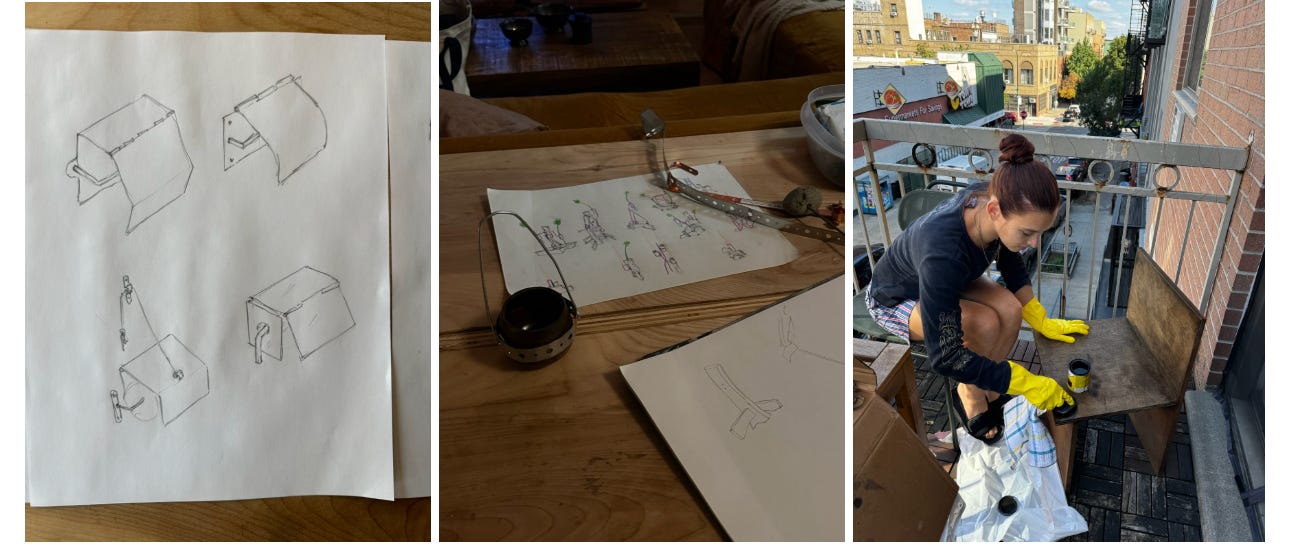
A couple years earlier, in spring 2023, I spent a few months in Paris. I was sketching constantly on café napkins and in notebooks—little objects, small furniture pieces, abstractions that my mind wandered toward. Paris does that to you. The architecture alone makes you want to make things more beautiful, intentional and tactile.
I hesitated before sending the drawings to Joel. Would it feel inappropriate, like crossing an employee line? I sent them anyway. That small decision cracked something open. At the time, Joel was already experimenting with sheet metal. I had been working in ceramics. We began exchanging drawings, ideas, renderings; discovering a shared language around form, proportion, mixed materiality, and function.
Eventually, we decided to make it real: Item: Enso.
Our boss was generous and supportive. She placed a few of our pieces in her projects and we hosted our launch party at her Galerie in October 2024. After that show, we had many long, late-night conversations. Did this have legs? Even if it meant not making money for a while? We both felt yes.
So we gave notice in early February. It didn’t go amazingly —understandably so. Losing your entire team is hard. Suddenly we were on our own: last paycheck, no clear roadmap ahead. I developed a strange, physical anxiety I’d never felt before. I’dI wake up convinced I had forgotten something catastrophic, even when nothing was wrong. My body didn’t know how to process the absence of routine or steady income.
In reality, going out on your own is not romantic in practice. There are a thousand invisible things you don’t realize you’ll need to navigate until you’re already in it.
What I wish I’d known (& what helped)
For anyone building a business, there are endless checklists online. And ChatGPT will happily generate more. But I wanted to share the human side: the things that surprised me, scared me, and genuinely changed how I ran my business.
1. Create an LLC early
Even if you’re freelancing on the side.
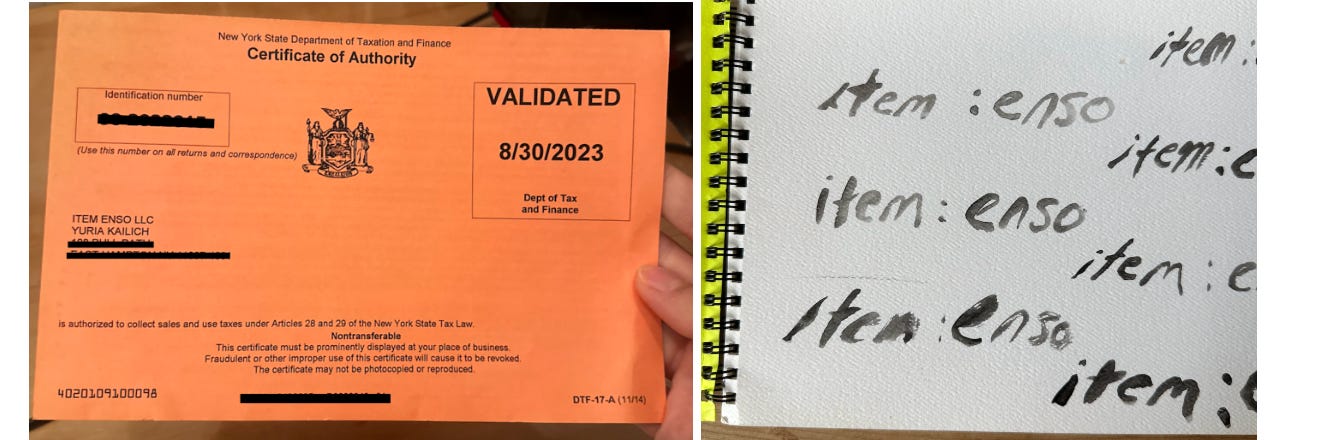
It costs under $300 to file yourself in New York, and physiologically, it shifts something. You stop treating your work like a hobby and start building a structure that can grow.
The hardest part is naming it. Choose carefully, as this becomes your container. More on this below.
And for those starting an interiors or resale business, make sure to purchase a resale certificate for tax exemption and other!
2. Branding matters – but timing matters more
Pick the right person to do your branding and ensure you are using the right platforms.
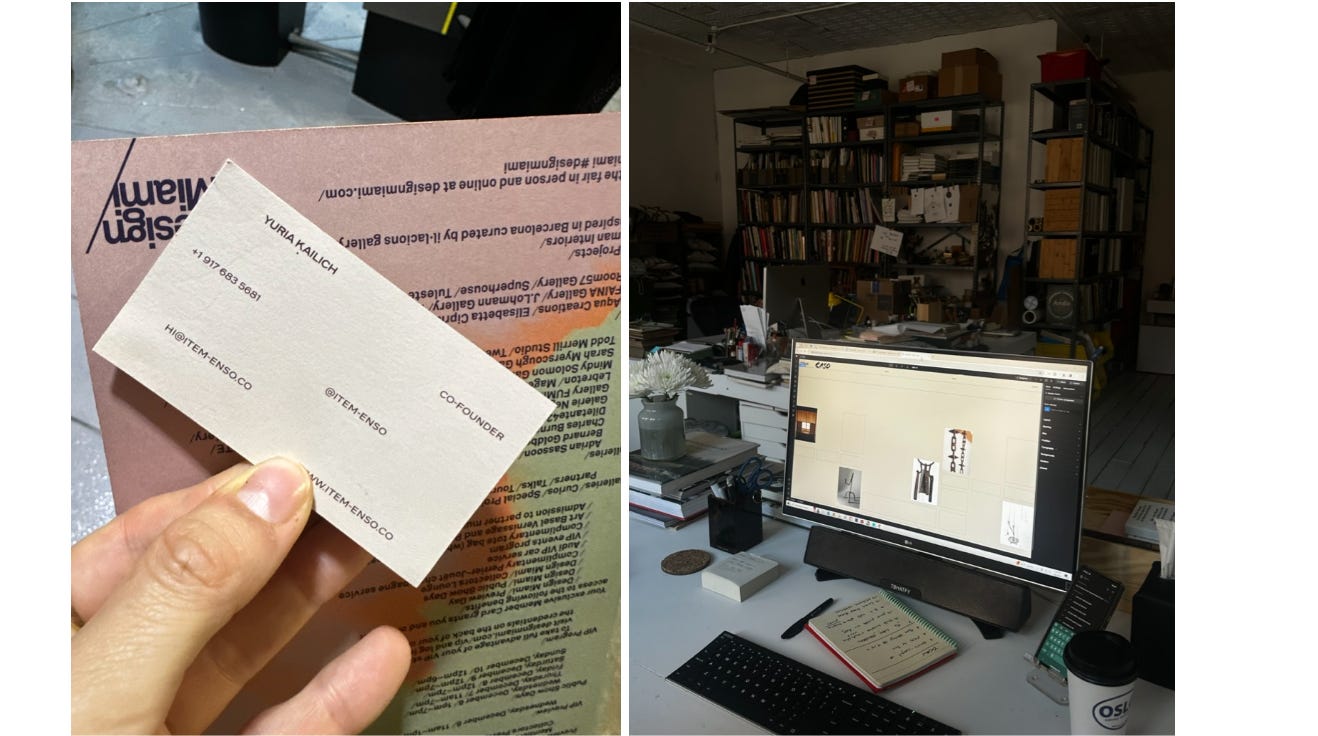
We worked with my dear friend Christy Rappold, an incredibly talented designer and branding wiz who custom built our website and branding from the start. Her work is beautiful and thoughtful.
That said: we invested more money than we had into a custom website early on. In hindsight, those funds would’ve been better spent on marketing or business development. We had a landing page for a while, just while we figured out our studio. Then we had a page just for item: enso with our two collections. We’re now on our third website iteration as the studio naturally split into two sectors. We have gone from Item: Enso to Of: Enso — fully embracing the shelter (interiors and spaces) and item (objects, furniture and lighting).
Don’t get me wrong, the website and branding is extremely important. If I could do it again: let the brand breathe before locking it into something bespoke
3. Hire professionals sooner than you think
Accountant. Bookkeeper. Tax advisor. This is where I wish we invested immediately.
Trying to retroactively organize expenses, invoices, production costs, overcharges, undercharges is exhausting and error-prone. Doing it live is boring, admin-heavy, and absolutely necessary.
Finding the right tax person is vital to a small business. It will save you money and stress. There’s a lot of benefits with how you’re submitting your taxes and expenses. Small distinctions matter more than you think.
4. Legal and business structure is worth the spend
We almost skipped a webinar with Brazilian interior designer André Mellone and his business manager, and it ended up being one of the best decisions we made.
We hired a team to help us:
Structure how we are billing our hours
Ensuring we aren’t undervaluing ourselves.
Draft legal contracts (engagement letters, internships, consignment, or collaboration agreements).
It wasn’t cheap, but it was worth every dollar.
5. Track your time (seriously)
We used to manually log hours across Google Sheets. Hours fell through the cracks. Entire days disappeared.
We now use the time tracking platform Harvest. We’ve only recently done this in the past month. Understanding what’s billable vs. non-billable changed how we work, how we price, and how we respect our own time. At the start, so much labor is invisible — admin, development, learning. You need systems early.
6. Lessons Learned the Hard Way
Put your foot down when contracts end.
Ask for help when you need it. Understanding that you cannot be all the parts your business needs, and relinquishing power to someone who does X full time and can do it in two hours instead of the six.
Always get an invoice and W9 before committing to a job. Paper trails matter. Vendors need to be in your system for end of year taxes, and god forbid you get audited.
Measure elevators and any constraints in your client’s home. Measure again. (Interior designers know.) Having a Dr. Sofa come on site, or a specialist who can shimmy furniture into a small nyc apartment, is a nightmare and takes years off your life. It happens at every single firm I’ve worked out, and we made the same mistake at Enso.
Be crystal clear about your role. We are not contractors, architects, or project managers — yet we often become the default point person. Knowing this from the start and putting it in writing in your contract or emails, will save you lots of time, stress, and money.
This industry has a lot of finger-pointing. Learn which battles to fight, which to release, and how to protect yourself gracefully.
7. The Quest Continues, for Many Things
Joel and I find ourselves still with so many questions; by no means do we feel we have it all figured out!
Is it worth investing in a well-known photographer early on for visibility? We’re still figuring that out. We worked with a wonderful photographer, Marco Galloway, for our last two projects— deeply respected, incredible eye — but without a massive Instagram presence.
How much does Instagram contribute to your success? Social media is something we neglect and want to be better at. Something worth investing in, but how much, and if anyone has any advice and how to continue to grow and build a community, would love to chat.
Asking for a business loan: How do you ask for financial help if you aren’t selling a product that an investor will see a return on? The biggest struggle is we didn’t pay ourselves a salary for a year and each took on some freelance work on the side to pay for our lifestyles. In the last three months, we started paying ourselves a small monthly salary, which has been extremely rewarding. Curious to know if there are design businesses who have received loans after presenting a business plan forward (surely family loans)
Where are collectors actually buying? Are gallery models still the convenient highway for acquisition? Or do small storefronts with elevated everyday magnetism do the trick?
If anyone has any advice and how to continue to grow and build a community, I would love to chat.
8. Final Thoughts
We didn’t know what we were doing. We’re still learning. But caring and trying anyway feels like the point. Being your own boss lights a fire under your ass, but you need to stay focused.
If you’re building something small and personal, I hope this makes you feel less alone. And maybe gives you permission to clap for yourself, just a little.
Proud of both of you!
I love this very practical and real