A Space Between - Vol. 5 Design Notes from Japan
Design Notes from Japan

Hello from Japan! Veronika and I have been here for three blissful weeks after a three-year hiatus; a product of busy schedules, divorced parents, and all of us living in different countries.
One of the biggest things I fall back in love with every time I return is Japanese design and craftsmanship, and how deeply integrated it is in the everyday – not just in grand historical infrastructure, but in the smallest details. I wanted to share a few things that make Japan, Japan: the subtle, thoughtful design choices.
I. Bamboo Craftsmanship
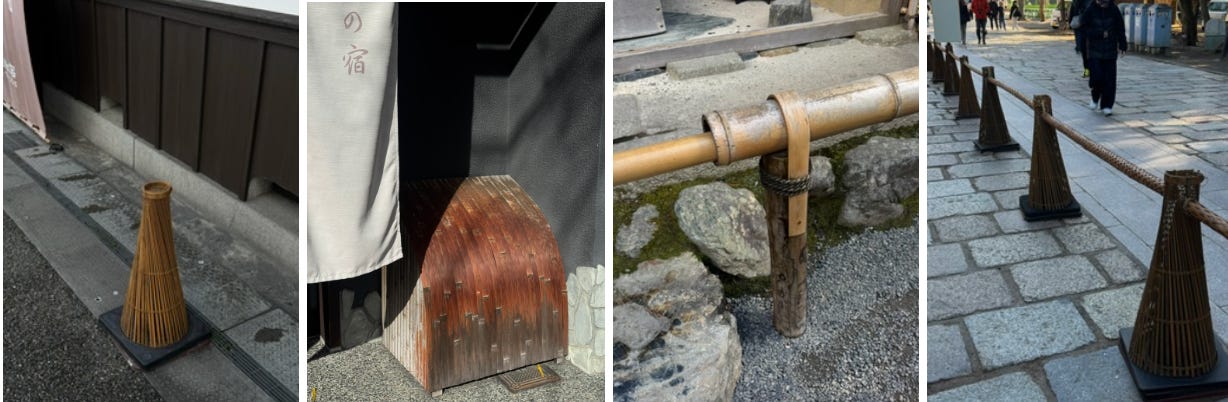
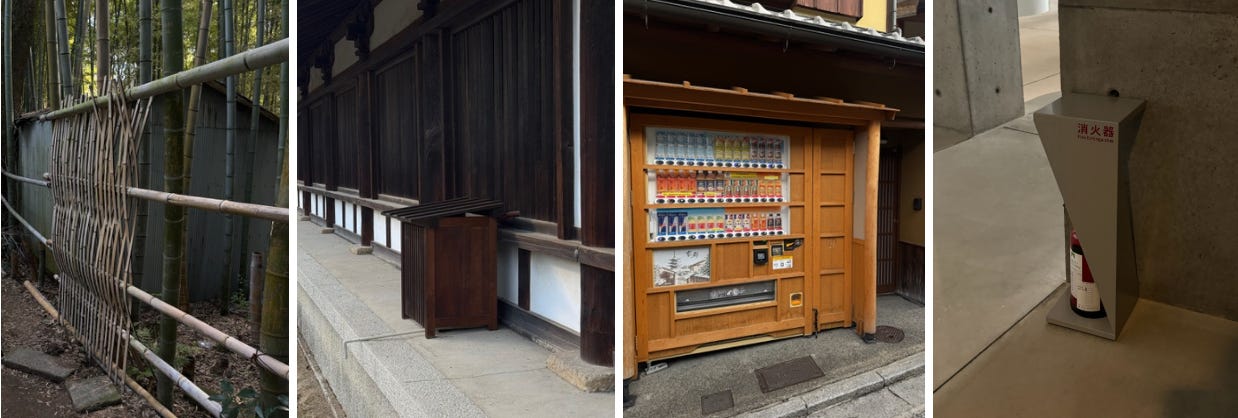
Bamboo isn’t just aesthetic — it’s a material with a deep cultural lineage in Japan. Walking through Uji (just south of Kyoto), there are thoughtfully designed cones, queue barriers, fire extinguisher covers, trash cans, vending machines, all camouflaged next to historic sites or neighborhoods, never disrupting the visual language of the landscape.
In temples and shrines, bamboo is often used for fences, gates, and subtle boundaries, woven or bound by hand to define space without overpowering it. In Shinto practice, bamboo can even mark sacred areas, acting as a quiet threshold between the everyday and the spiritual.
Regions like Beppu in Ōita Prefecture have produced high-quality bamboo craft for generations, using different treatments (fresh, heat-treated, naturally aged, even susudake - bamboo darkened by decades of smoke). These techniques are used to create everything from baskets and lighting to everyday functional objects. The region even has formal vocational training and certified artisans dedicated to preserving the craft.
II. Packaging & Presentation
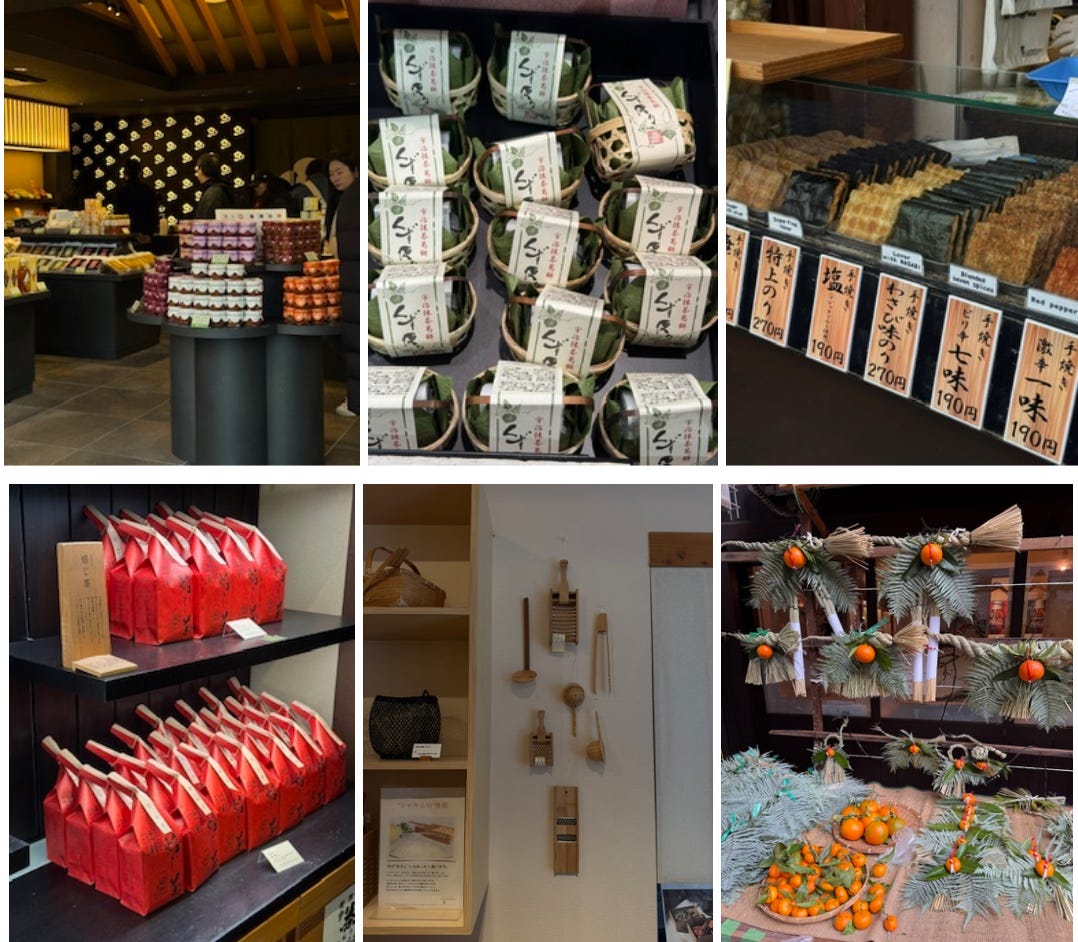
Japanese packaging goes far beyond “pretty packaging.” It’s about intention, ritual, and respect. Everything from tea bags to umeboshi is individually wrapped, not just for protection but for experience. There’s a visual and tactile language of restraint that makes even the mundane feel considered.
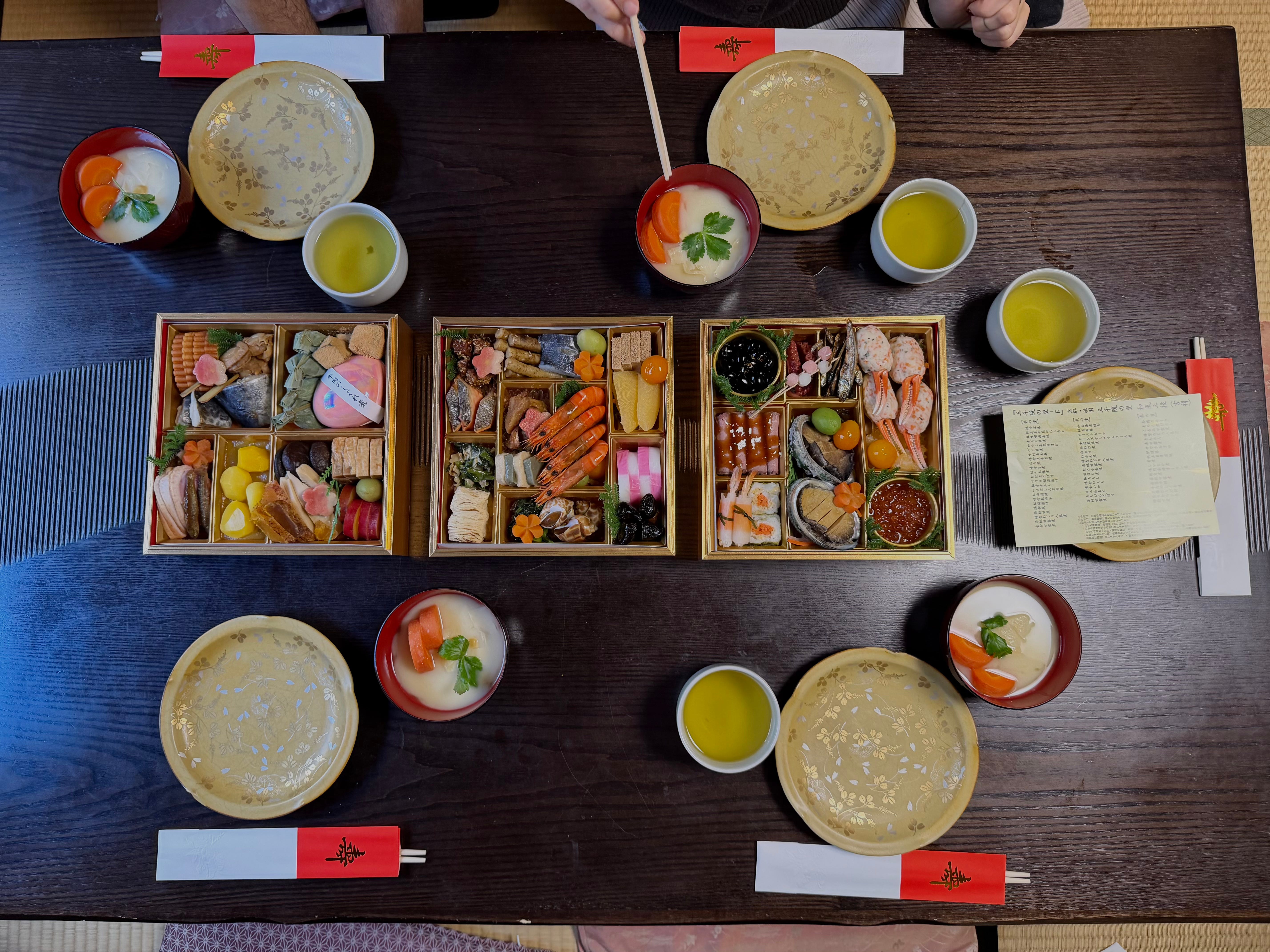
A beautiful example of this mindset is Osechi Ryori, the traditional New Year’s meal. The dishes are prepared in advance and neatly packed into tiered lacquer boxes called jubako, meant to be enjoyed over the first few days of January. Each item carries meaning: sweet black soybeans (kuromame) for health, rolled omelet (datemaki) for learning and knowledge, and red-and-white pickled vegetables (kohaku namasu) for celebration and joy. It’s packaging as ritual — food, container, and symbolism all working together to wish good fortune for the year ahead.
This same philosophy shows up in contemporary brands like MUJI, whose minimal materials and thoughtful typography emphasize the object over the packaging. In Tokyo, we stopped by an exhibition at the museum 21_21 Design Sight titled Learning from Design Maestros. There was a section about how the German Ulm School of Design embodied Muji’s democratic design – reflection of the cultural mentality that values usefulness, longevity and subtle clarity.
III. Design for Ease – Small Details, Big Difference
Japan is best at designing for everyday ease. These are things we don’t realize we need until we see them — and then desperately wish we had back home.
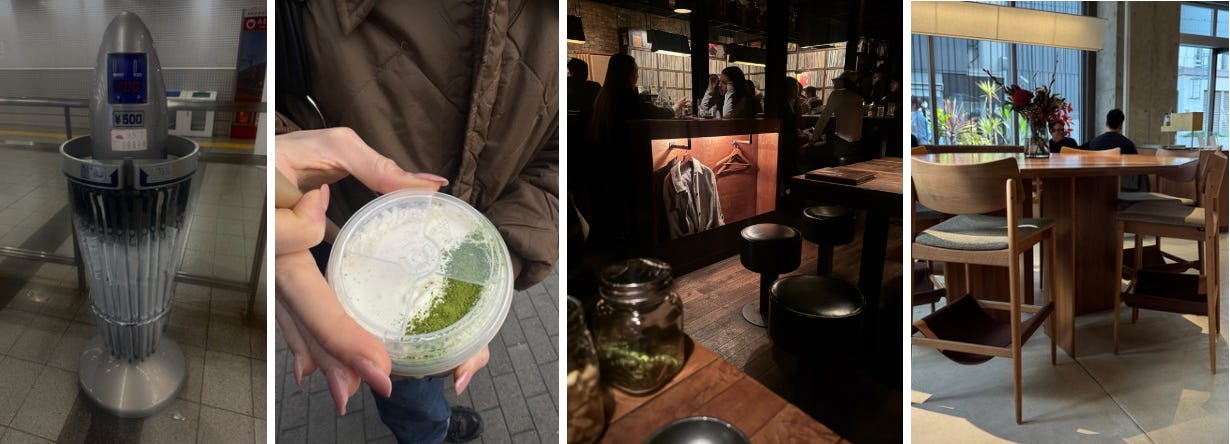
Umbrella dispensers at subway stations – super useful for when the rain suddenly pours; you rent one for roughly 500¥ (~ $3, image below).
Plastic drink caps on your to-go beverages that lock in place, circling perfectly to prevent spillage and effective drinking (image below)
Coat racks in restaurants and bars, keeping coats off the floor (and away from smoke)
Bag storage under all seating in restaurants and bars
Even the smallest frustrations are addressed:
Toilet paper holders with side flaps that make changing rolls effortless, solving a small but universal annoyance.
Toto toilets with heated seats, bidets, dryers, and privacy sound options for those who are pee shy; a whole new level of comfort and UX in a room most of us rush through.
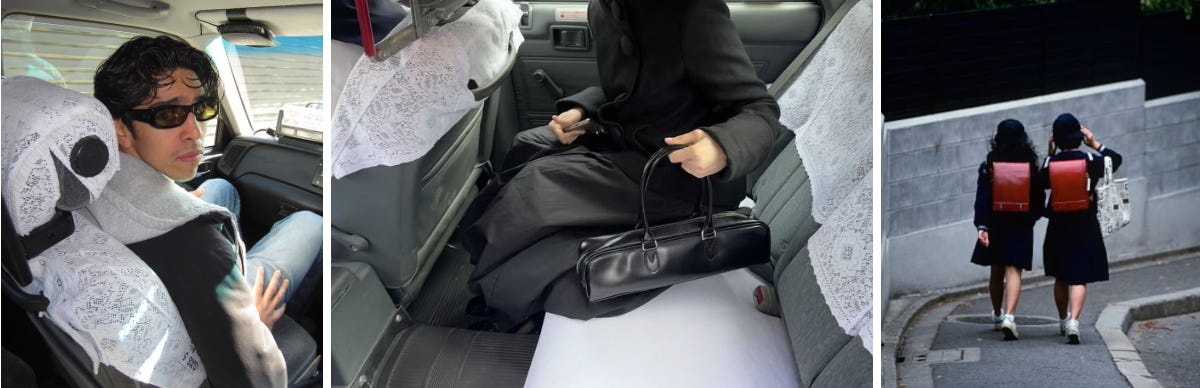
Taxis with automatic doors and heated seats — automatic rear doors controlled by the driver, heated seats, lace-covered headrests, pristine white upholstery. There’s an unspoken trust and respect between driver and passenger. (Note for visitors: don’t touch the door — it’s not rude, the driver’s got it.)
School uniforms fall into this category of thoughtful design, too. They level the playing field, minimizing visible markers of wealth while becoming an iconic part of Japanese visual culture. As someone who wore a uniform through high school, I’ve always respected how Japanese schools use uniformity to create equality — everyone shows up on the same footing.
As noted in this article, “These distinctive uniforms were directly inspired by the British Royal Navy attire, reflecting Japan’s continuing fascination with Western maritime powers. The sailor suit represented not only modernity and Western ideals but also functioned as a visual break from traditional gender restrictions, allowing young women greater freedom of movement and a sense of participation in Japan’s modernizing society.”
You’ll notice students wearing skirts or shorts year-round — even in winter. Our mom told us that was just how it was: building resilience, discipline, and thick skin. A quiet reflection of Japan’s strict, structured culture.
Randoseru backpacks — not required, but everywhere. Dating back to the Meiji era, it’s both nostalgic and symbolic. I remember begging my mom for one every summer. At around ¥60,000 (~$380), they’re beautifully made, historic… and massive, especially for a first grader. The New York Times also wrote an article about the backpack.
IV. Designing for Society & Convenience
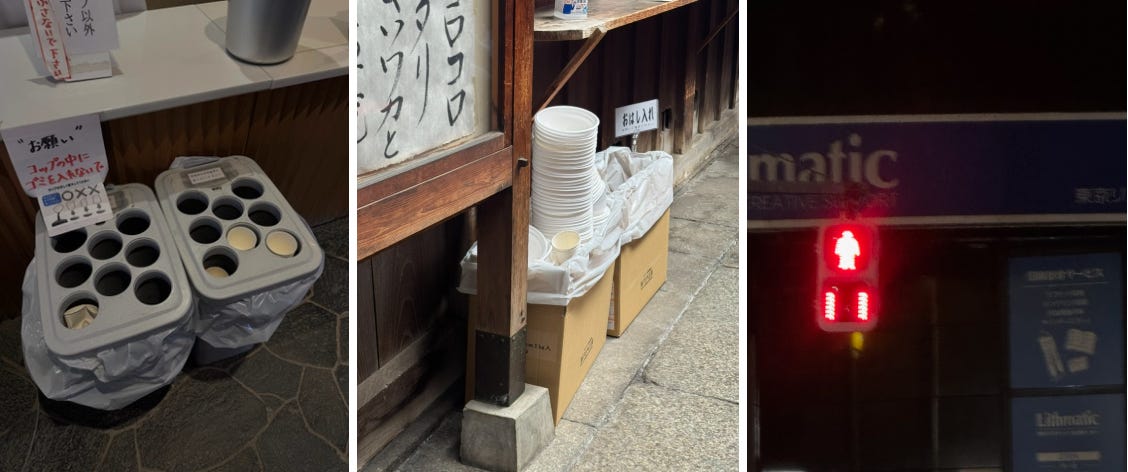
Street crossings display digital countdowns so you know exactly how long you have to cross — a godsend in a country where jaywalking is almost nonexistent (hard to resist the urge when there is no car as a New Yorker).
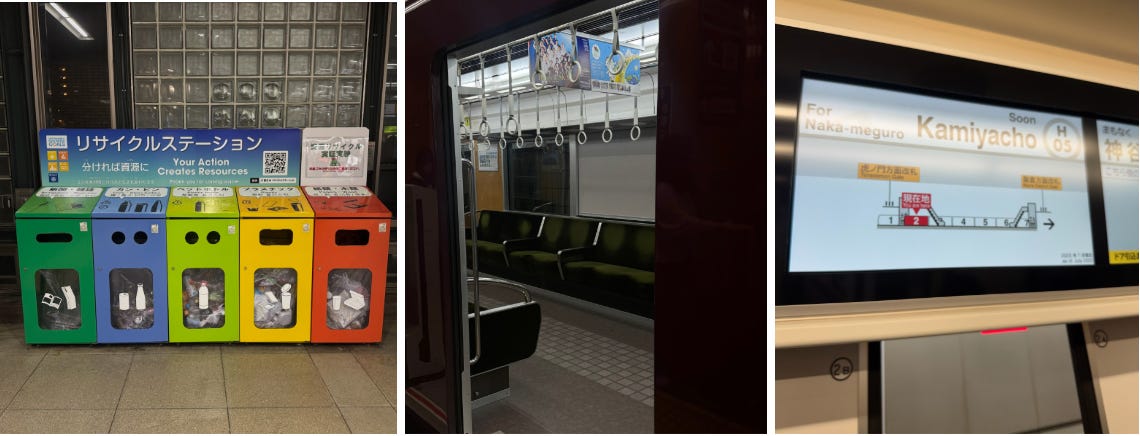
Train signage is almost overwhelmingly informative (in the best way). Screens above each doorway show which cars are crowded, where elevators and exits are located, real-time train positioning, and precise arrival times. It’s clarity designed at scale.
Trash is a topic for another time, but from a design standpoint, the color coding, graphic clarity, and wayfinding around recycling is impressive — even if the lack of public trash cans can be frustrating as a visitor.
V. Public Bathrooms - Clean, Considered and Often Beautiful
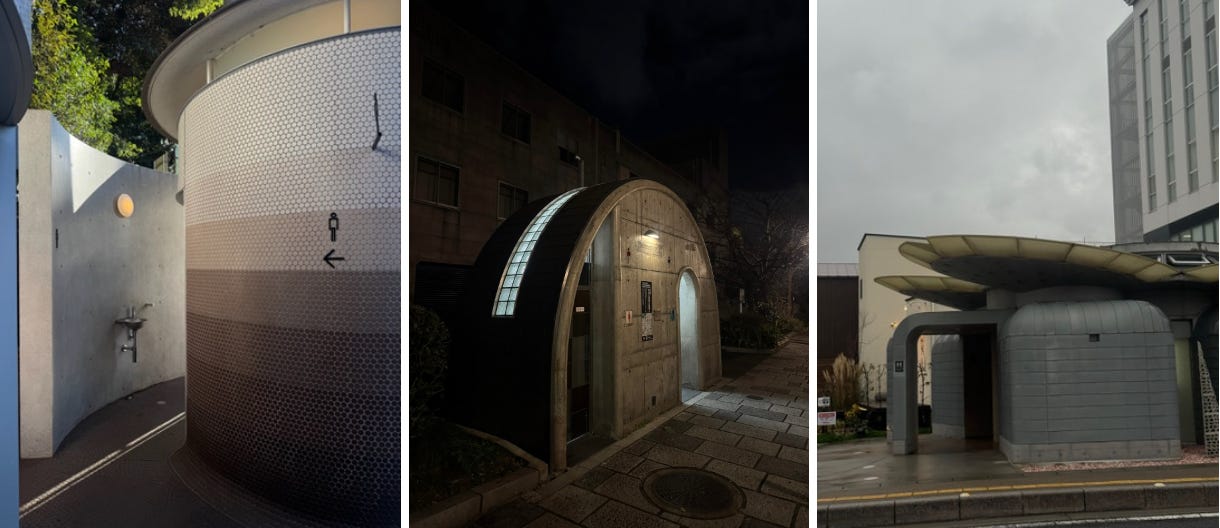
If you’ve seen Wim Wenders’s film Perfect Days, you’ve gotten a glimpse of Japan’s approach to public bathrooms: designed as real architecture, not an afterthought. The film highlights 17 redesigned public toilets in Tokyo’s Shibuya district as part of The Tokyo Toilet Project, launched in 2018 and designed by architects like Tadao Ando, Shigeru Ban, and Kengo Kuma to counter the global stereotype of public toilets as “dark, dirty, smelly and scary”. (NYC, please take notes!)
As an American, my instinct is usually to brace myself when entering a public restroom. In Japan, facilities are consistently clean, organized, and often equipped with seat sanitizers. This reflects a broader culture of respect for shared spaces — a collectivist mentality that prioritizes others.
There’s even the Otohime device, which masks bathroom sounds to save water from “courtesy flushing,” and an app called Flush that helps you locate the nearest public restroom.v
Toto toilets are nearly everywhere. Founded in 1917, the company introduced Japan’s first one-piece toilet in 1964, blending hygiene, technology, and comfort. Heated seats, bidets, air drying — though aesthetically, I still wish they were a bit less futuristic. (This is my next apartment necessity to splurge.)
Less seen, but still pulsing are traditional washiki squat toilets. Once standard until the 1960s, they were intuitive for a culture accustomed to sitting on tatami mats and wearing kimono. They often scare foreigners away with the necessity to squat over a ceramic trough — but they’re deeply tied to Japan’s history and ideas of hygiene.
Final Remarks
There’s so much more that could be said about Japanese design and the care taken to integrate it into daily life. It’s a proud culture with a deep respect for history, function, and collective experience.
We’ll definitely be sharing more from Japan — likely in a separate post soon.